Scrintal
Building the most enjoyable way to shape ideas – The Playground for the Mind, and designing and evolving a product from 0 → 1.
2022 – 2024
·
Team: Ece Kural, Furkan Bayraktar, Ersin Sezgin, Filip Lind, Mathias Björk
Introduction
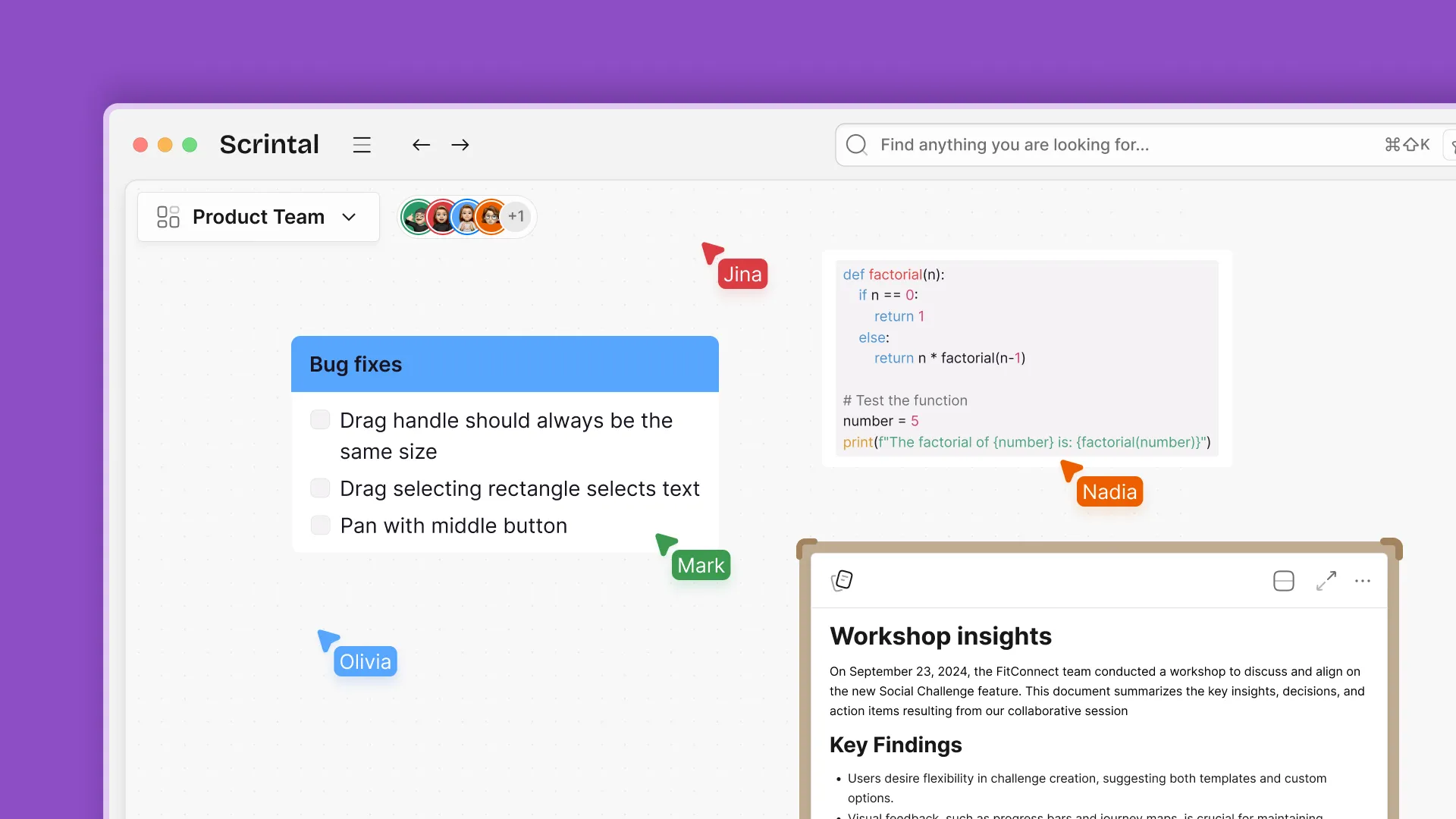
Scrintal is an infinite canvas app that gives users the possibility to place a variety of blocks (text, headings, media, etc.) on a board to brainstorm, think freely, and write. The work cumulated and resulted in the Playground for the Mind, a single place to enjoy a seamless transition between thinking, writing, and sharing.
To take Scrintal from 0 → 1, from beta to launch, we first made sure to align on a vision that drives us and the development and the design of the app. We created a shared understanding to iterate quickly, discuss openly, test often and early, and constantly work on discoveries. As a tight-knit team, everyone was open to bring in their ideas, and form them into actionable pitches ready to explore and work on.
Vision
To elevate the human potential through bold and innovative solutions.
Mission
Your brain is capable of more than you think. We’re here to show you how.
The challenge
Thinking, brainstorming, working on projects, and taking notes can be messy processes. Those are rarely linear flows. Yet, most knowledge management apps force us to work into a single direction, top to bottom. However, there was a need for a tool that supports the messy thinking processes, delivering versatility, but still providing structure and organization at the right time. High-achieving individuals should not have to rely on multiple apps to understand complex topics, bring their ideas together, and work on the tings they care about.
At the time I joined the team, the product was only available upon invite to its closed beta, there were over 35,000 people on the waitlist, however, Scrintal also faced a couple of problems:
No clear navigation
Users struggled navigating through the different areas of the app.
Misconception of core features
Retrieving content they accidentally removed was a challenge.
Unclear USP
Users struggled to get a hang of Scrintal's functionalities in general.
The goals
Building the most enjoyable way to shape ideas
Support messy thinking and structured workflows
Make knowledge work approachable

Role & collaboration
I established design processes, and led the development of those, taking the product from an early alpha to a public version. I conducted user interviews, worked on the overall product development and product discovery, as well as regularly taking part in product discussions, and closely collaborating with the CEO, CTO, Product Manager, and Engineers.
My contributions:
Establishing design processes and strategy
Building the initial version of Scrintal's design system, and docs
Conducting user interviews, and turning feedback into actionable items
Design concepts, and prototypes
Product strategy
Product design
Process & challenges
As a tight-knit team with loads of ideas, hundreds of early beta users, and thousands of people in a Slack community, it was important to distill inputs and information, that fueled product discovery and development. Through in-depth user interviews, competitor analysis, and research of the whole field of knowledge management, we identified our target audience consisting of high-achieving individuals who want to understand complex topics, bring their ideas together, and work on the things they care about.
Through quick iteration, prototyping, and testing, we moved fast to form opinions, as well as validate or falsify our assumptions. I led the user interview process, which I separated into:
Regular user check-ins to get raw inputs without me targeting a specific feature or test a specific idea.
Idea validation interviews during which I focused on presenting new ideas in the form of Figma prototypes.
Feature feedback interviews to gather inputs on recent updates we shipped.
By leveraging functional prototypes, we were able to uncover loads of usability issues, which informed the continuous product development.
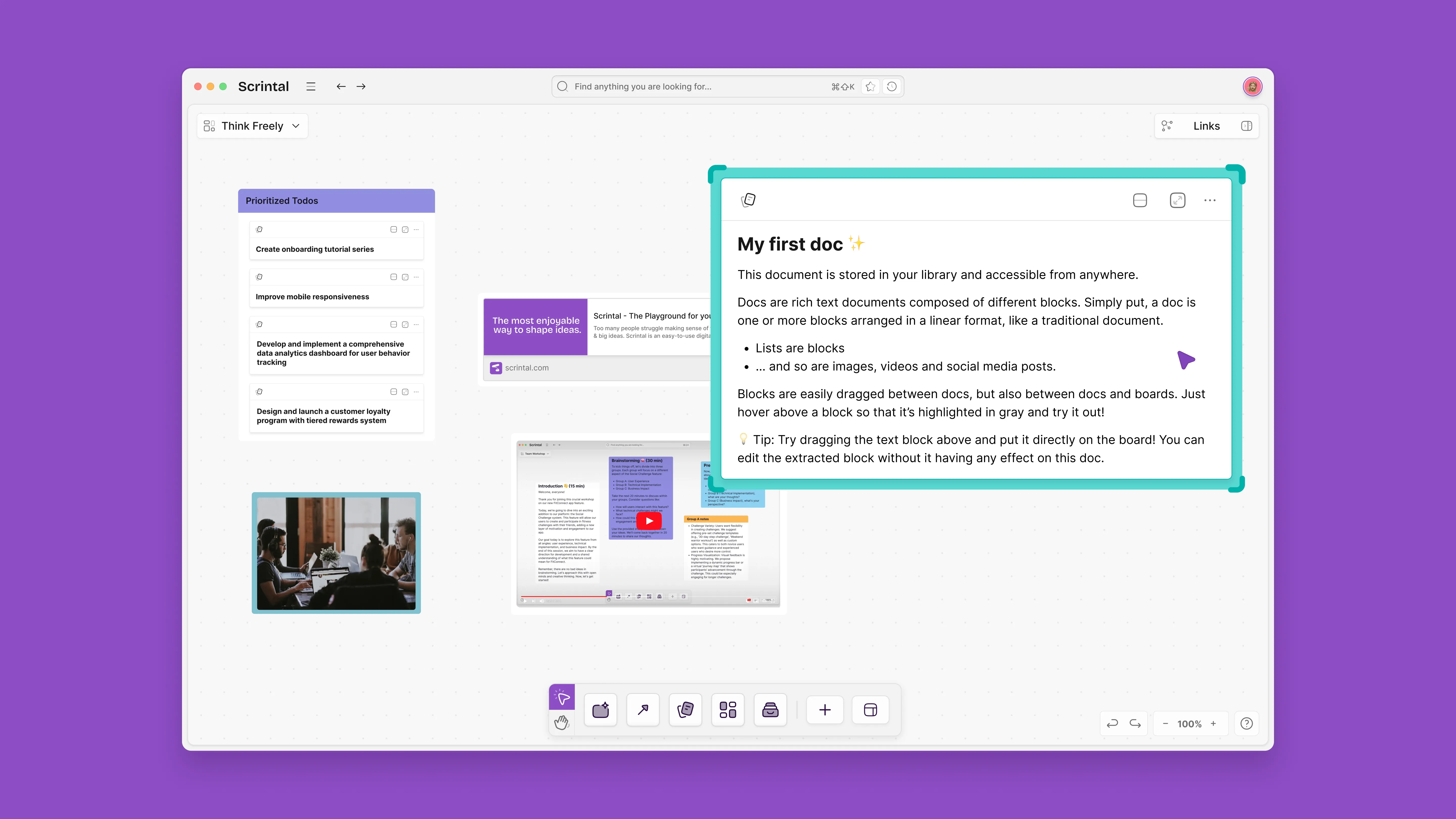
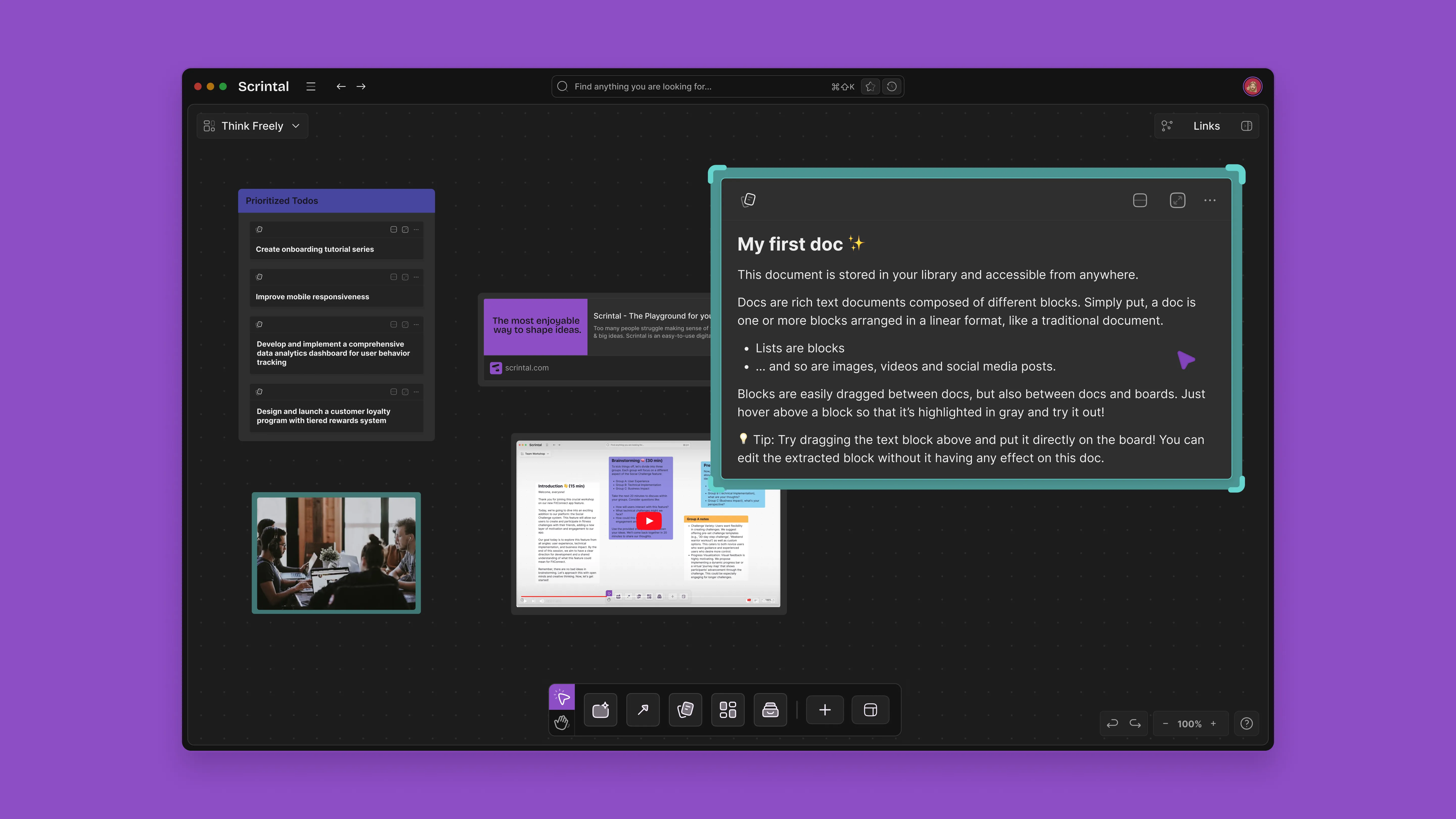
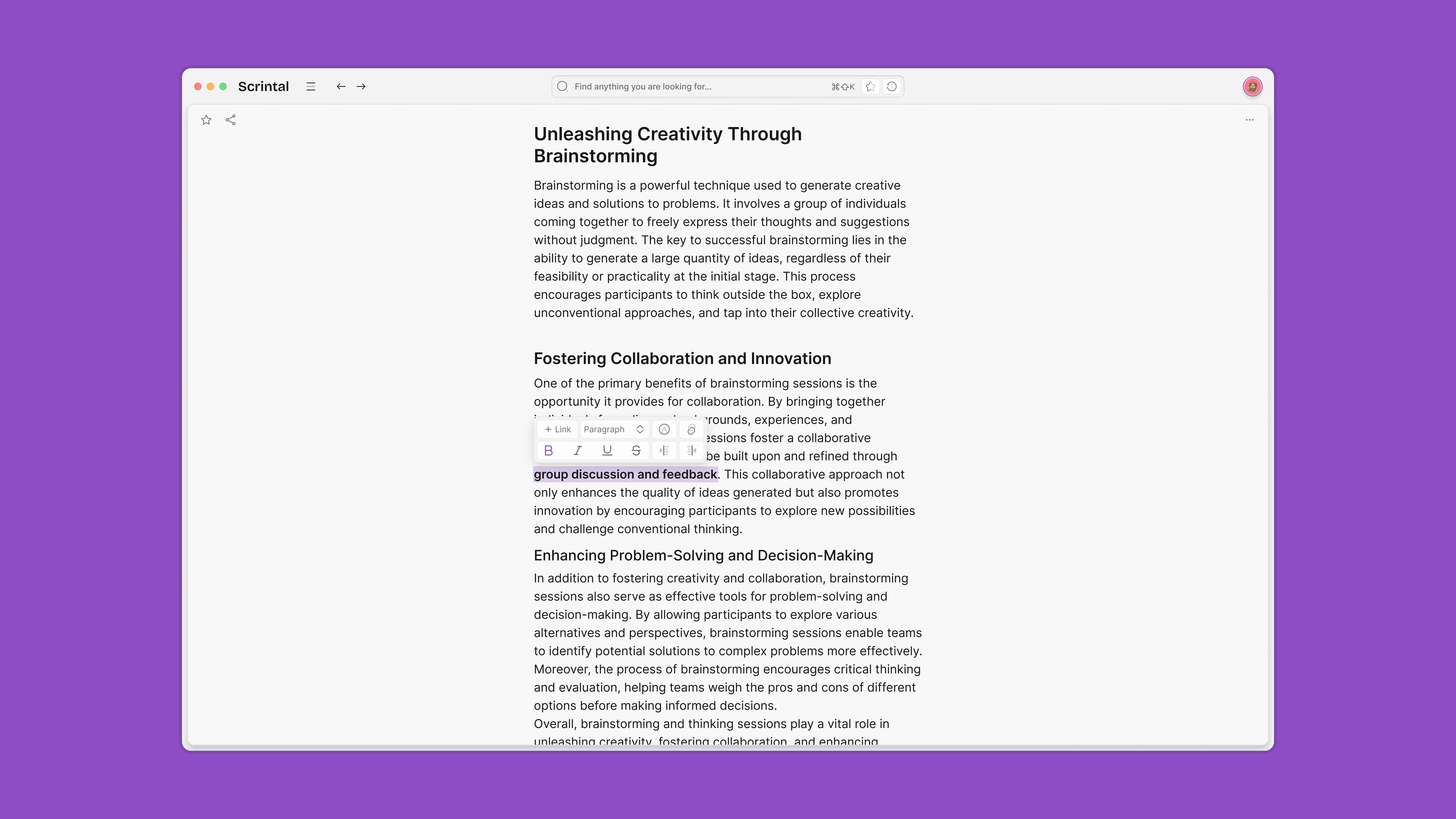
Versatility
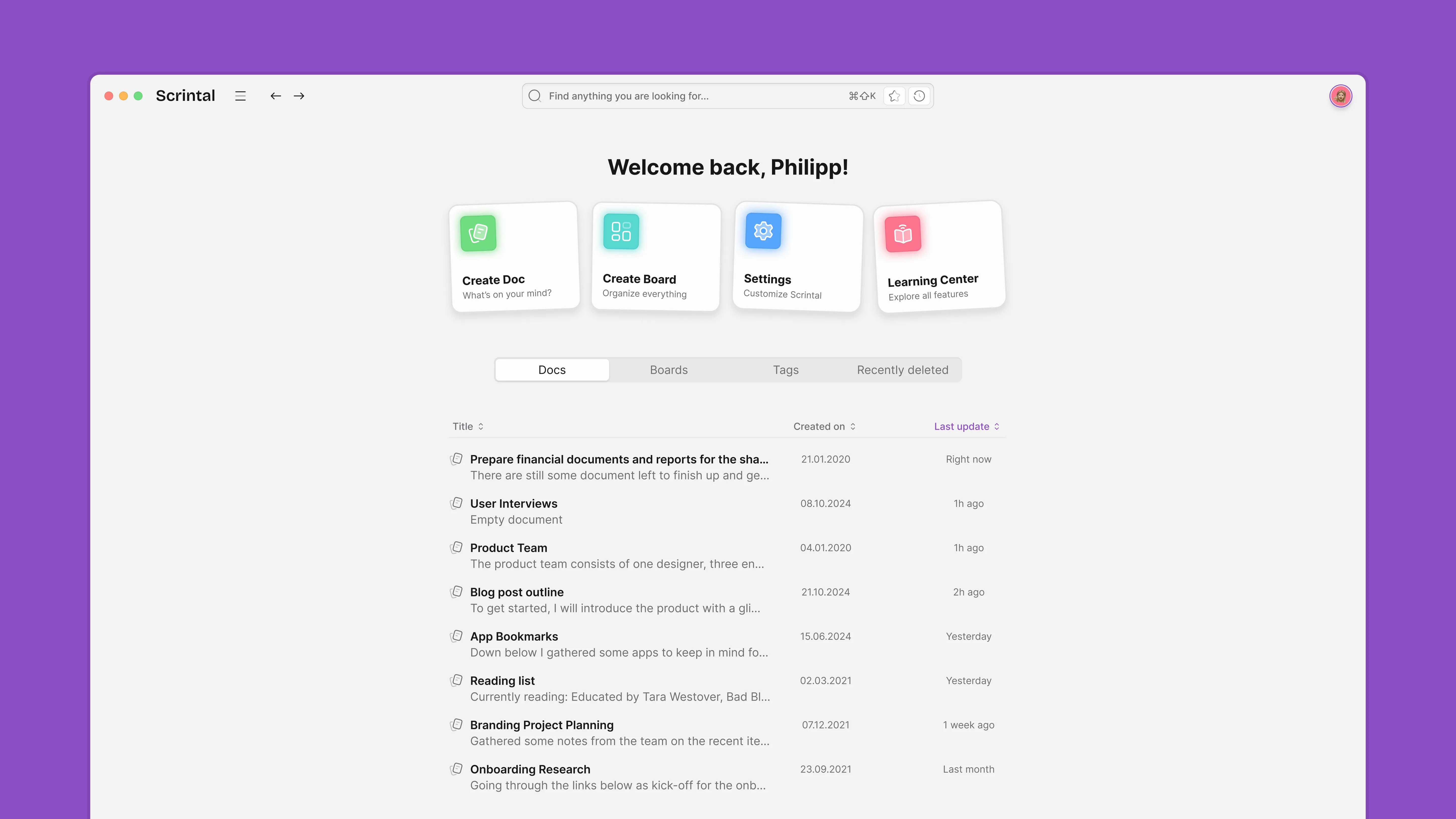
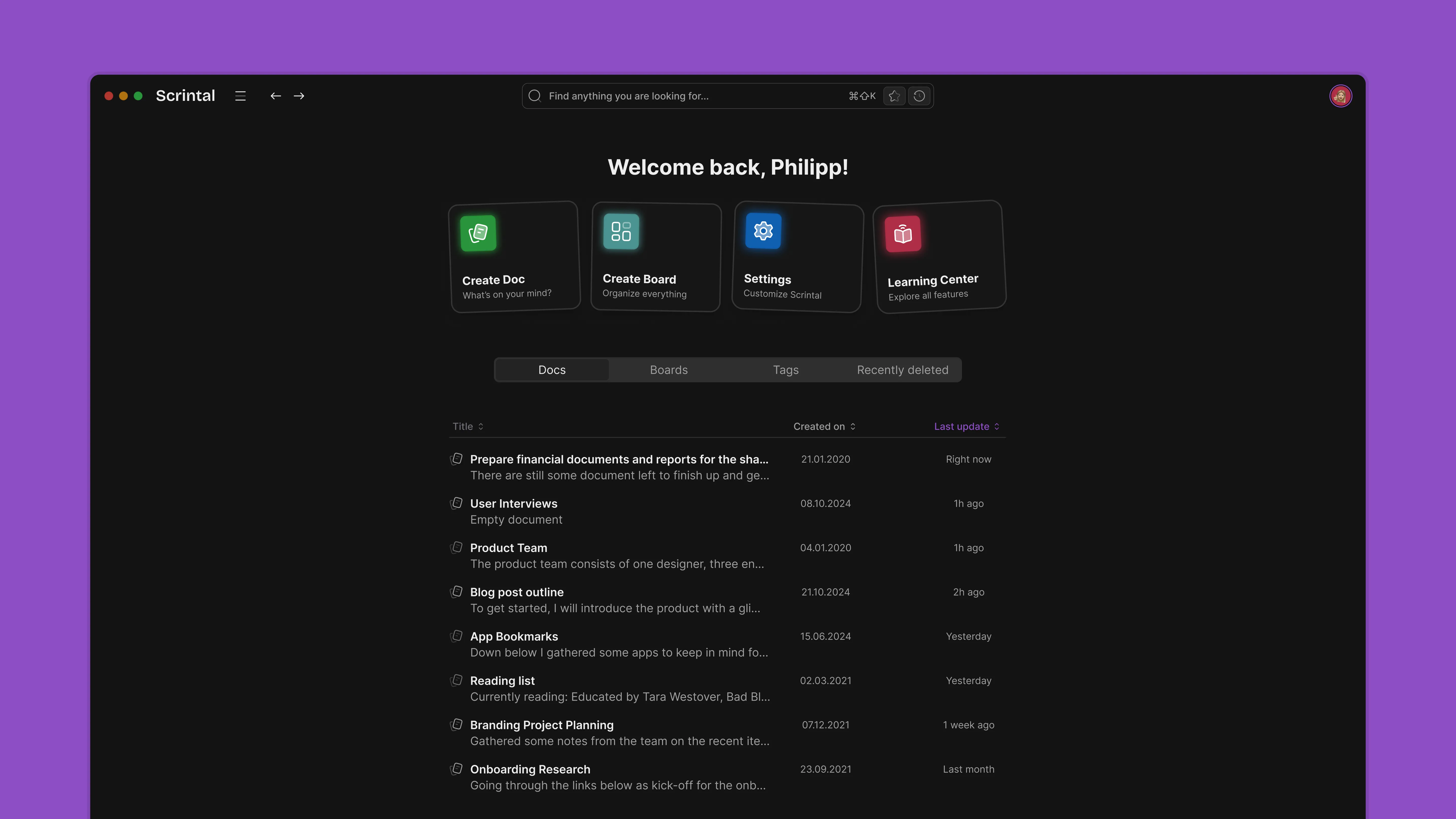
Scrintal combines the freedom of an infinite canvas with the power of dynamically reusable documents. Besides that, thanks to a variety of blocks and visual elements to brainstorm, Scrintal builds the bridge between the creative processes of thinking, writing, and creating. Scrintal's canvas and the single library containing everything you create lets you shape your ideas and transform them into lasting and new insights.
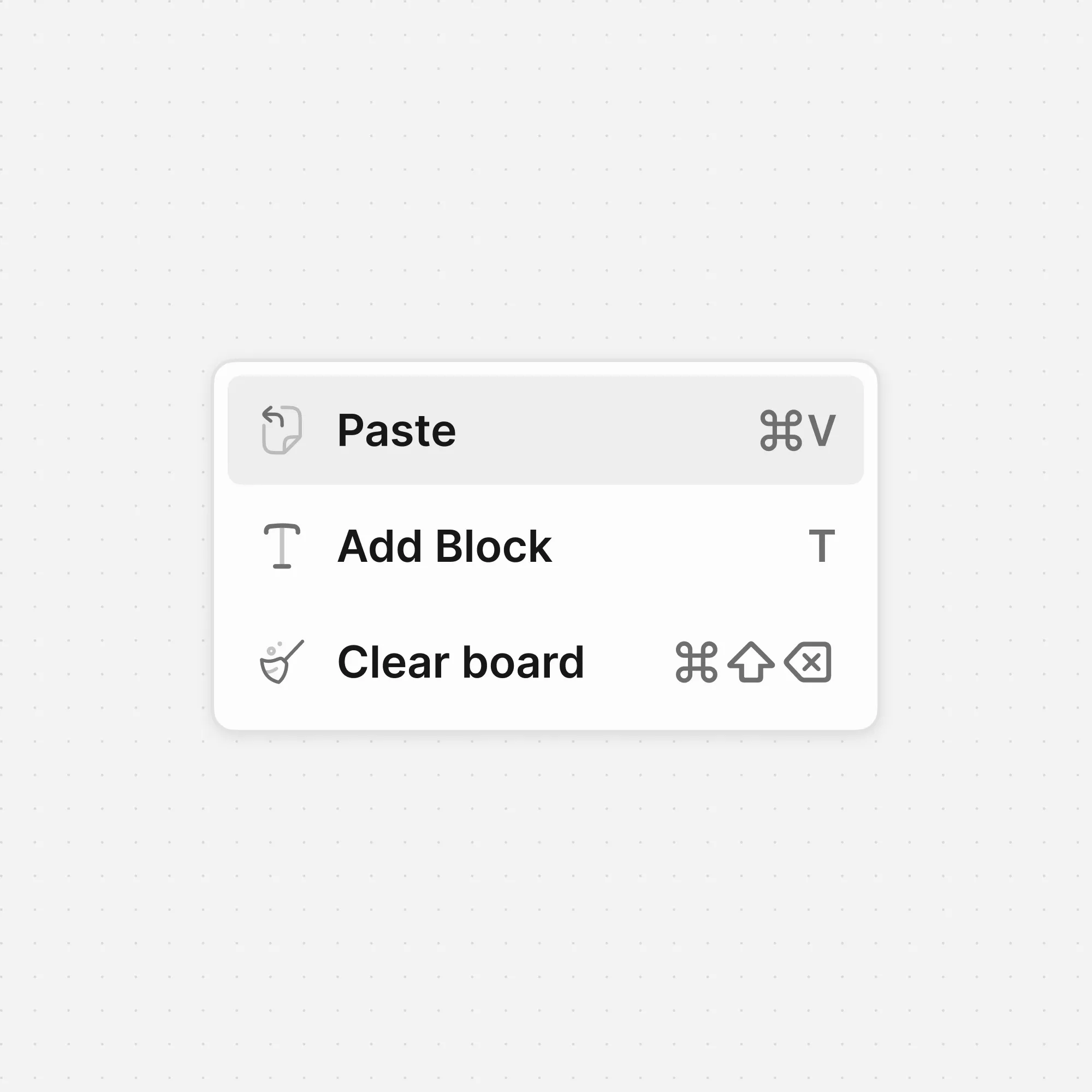
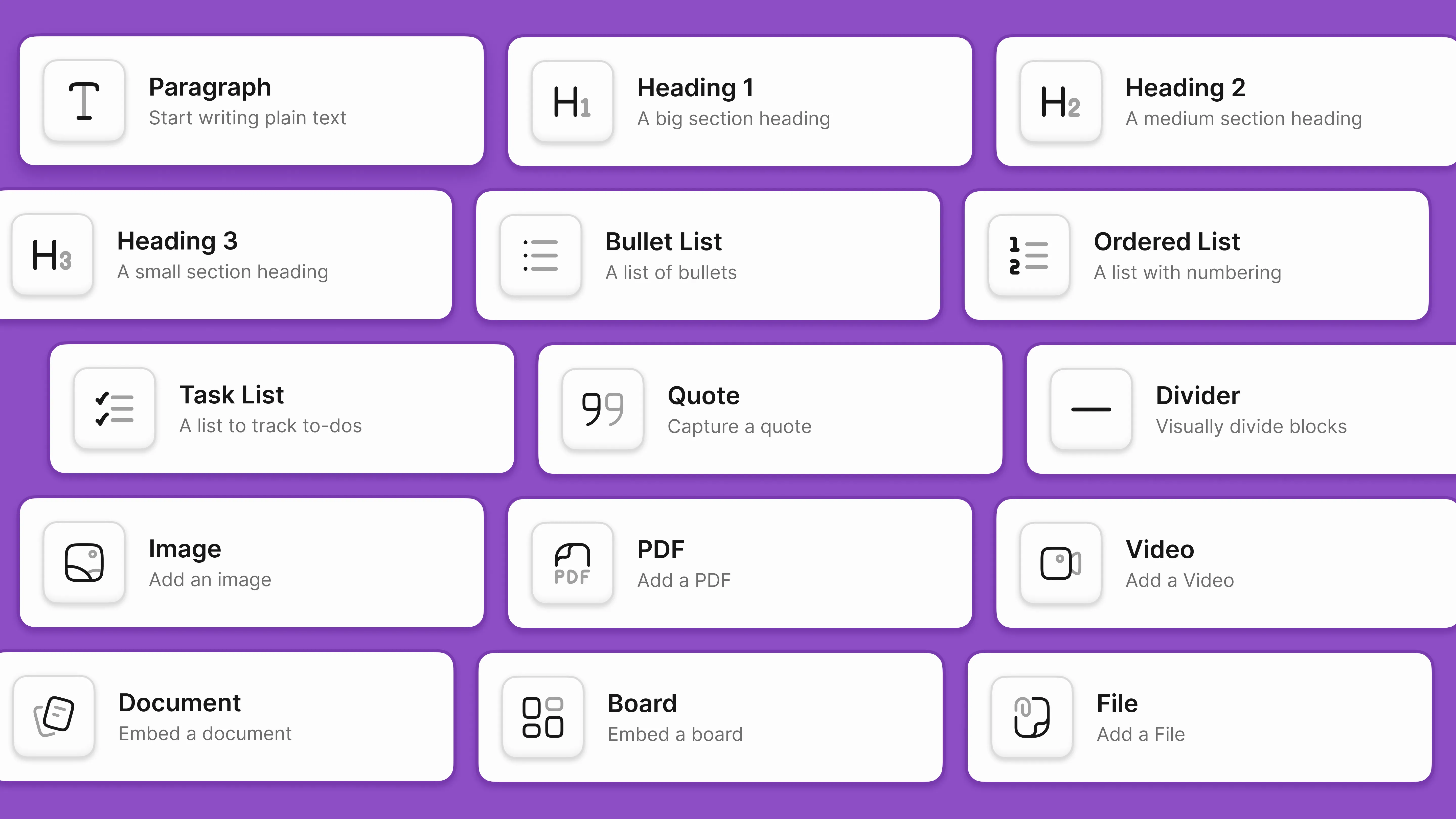
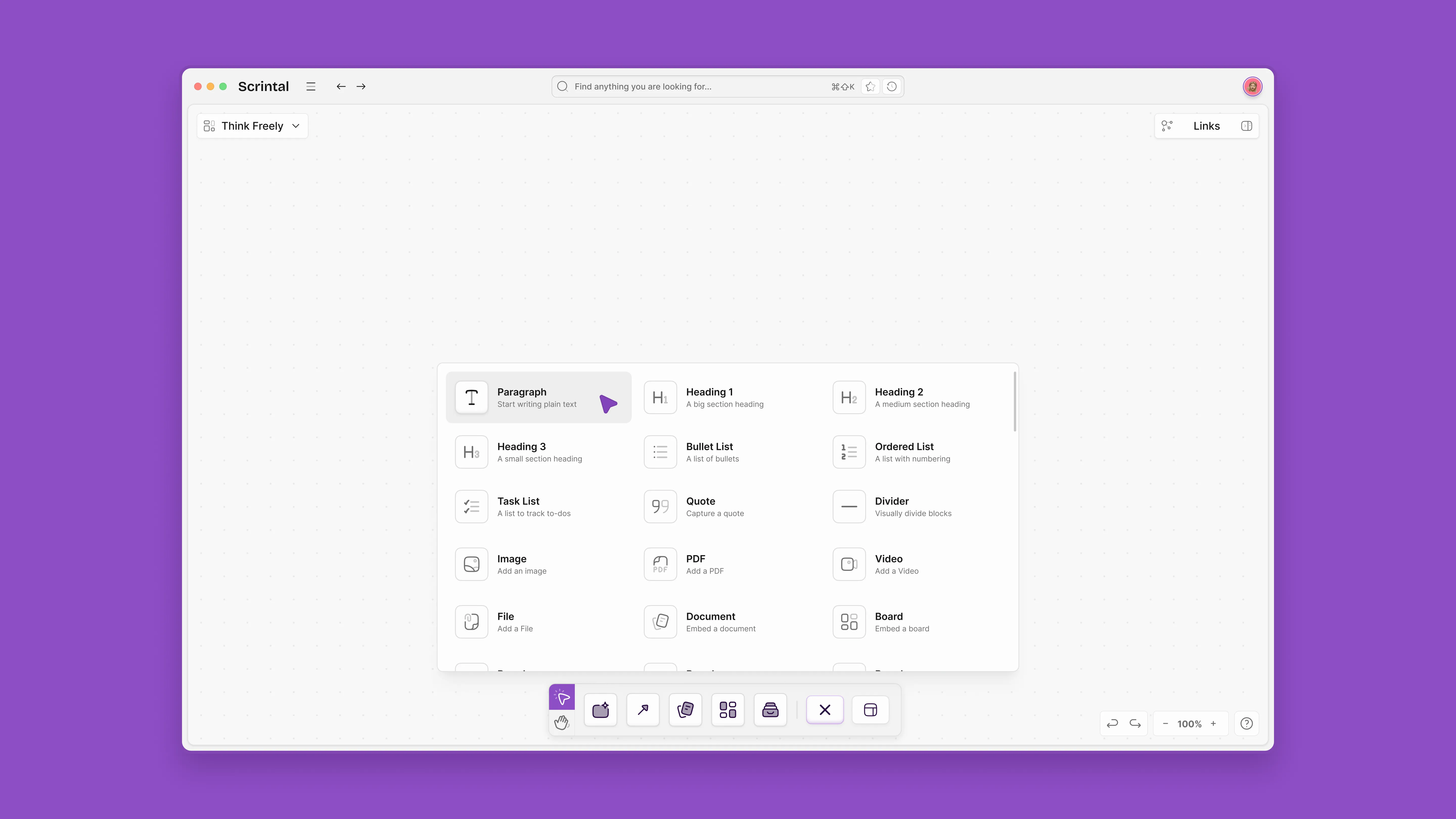
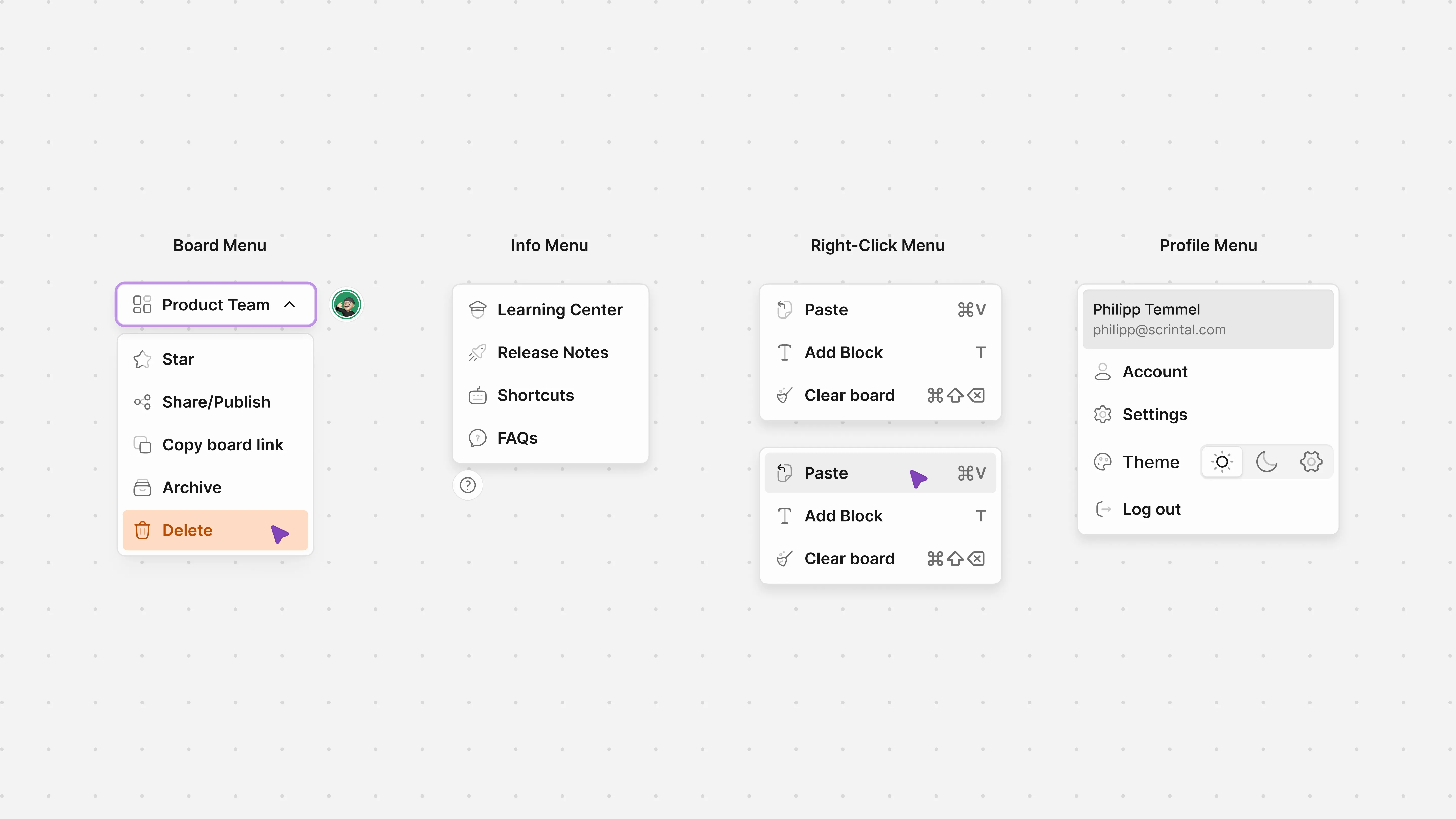
I designed a rich canvas toolbar that gives users access to the most important tools to create and interact with the canvas. Besides that, I created a dedicated menu to access the variety of blocks users could place directly on the canvas. No matter what kind of block a user placed on the canvas, interacting with it should have been fun and playful. Therefore, I designed a contextual action bar that appeared above the selected block and displays actions dedicated to the specific block type.
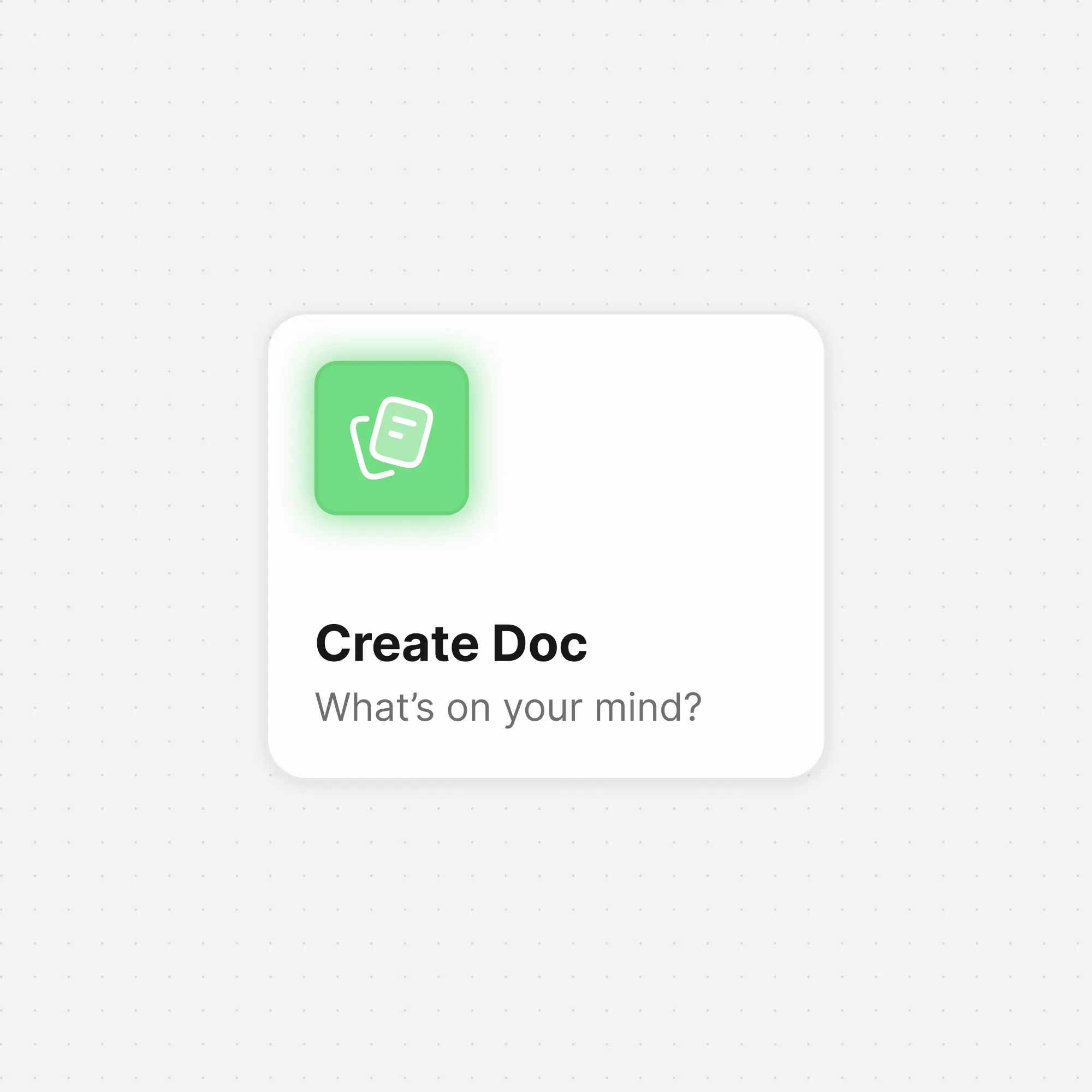
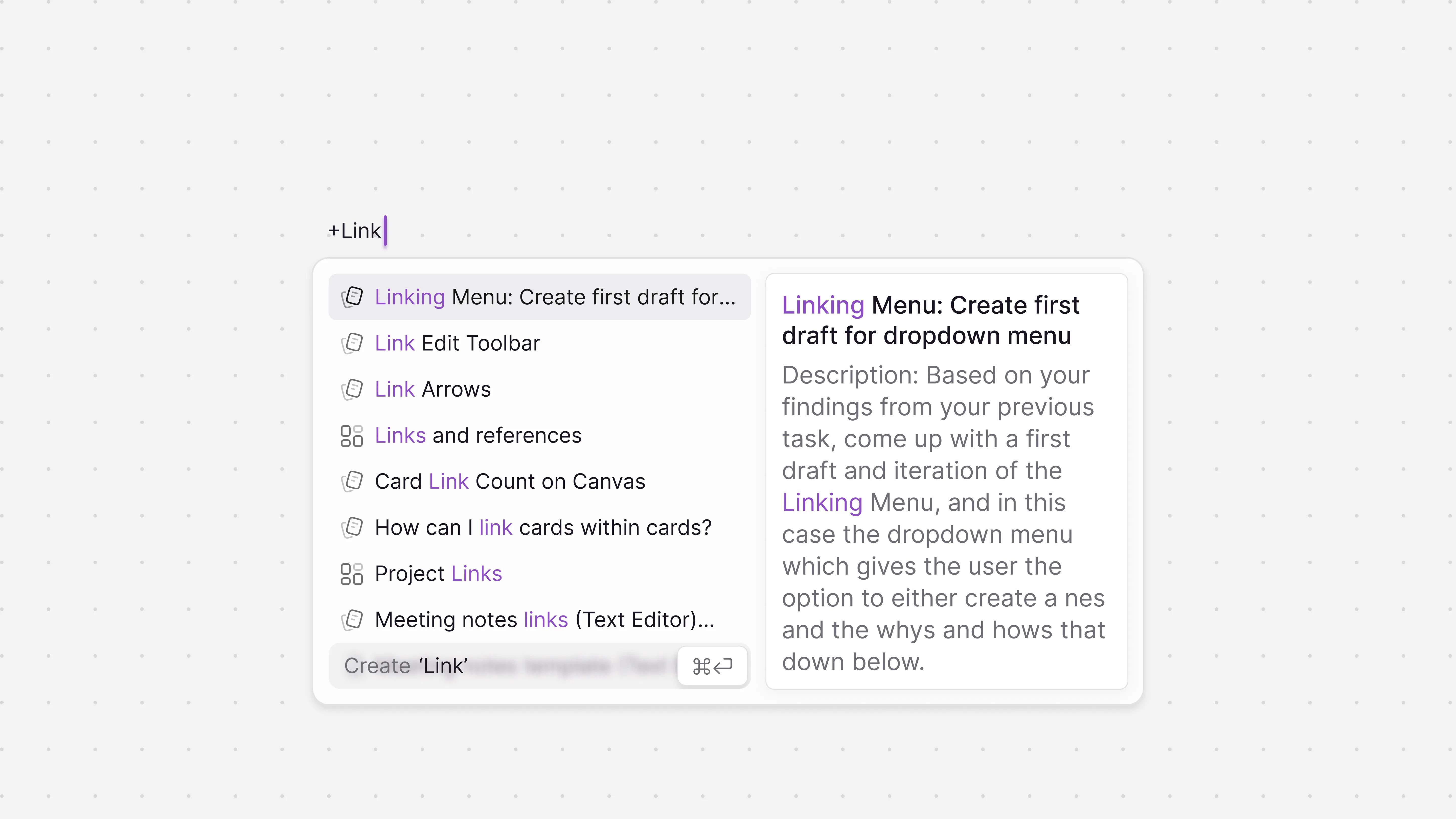
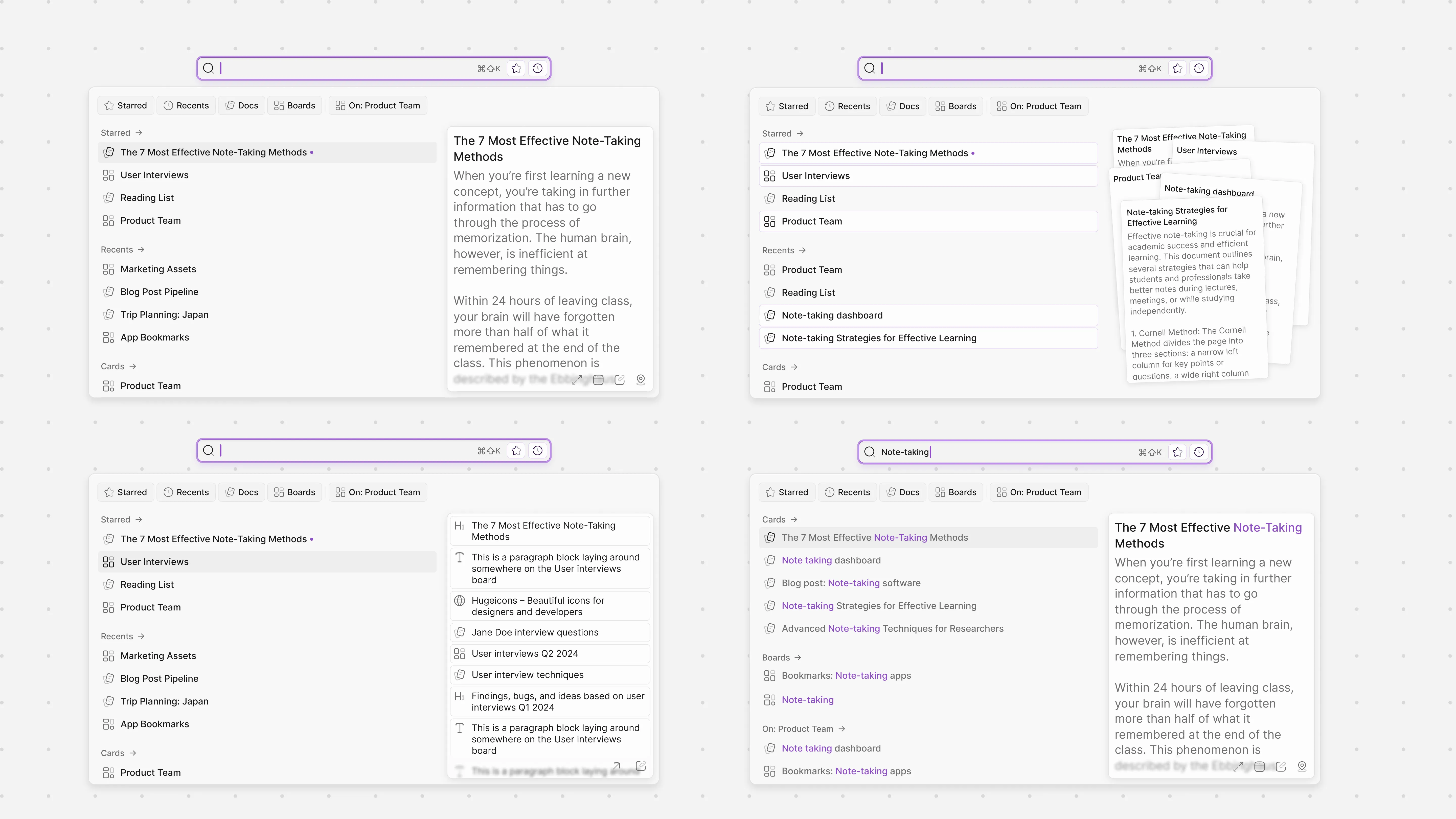
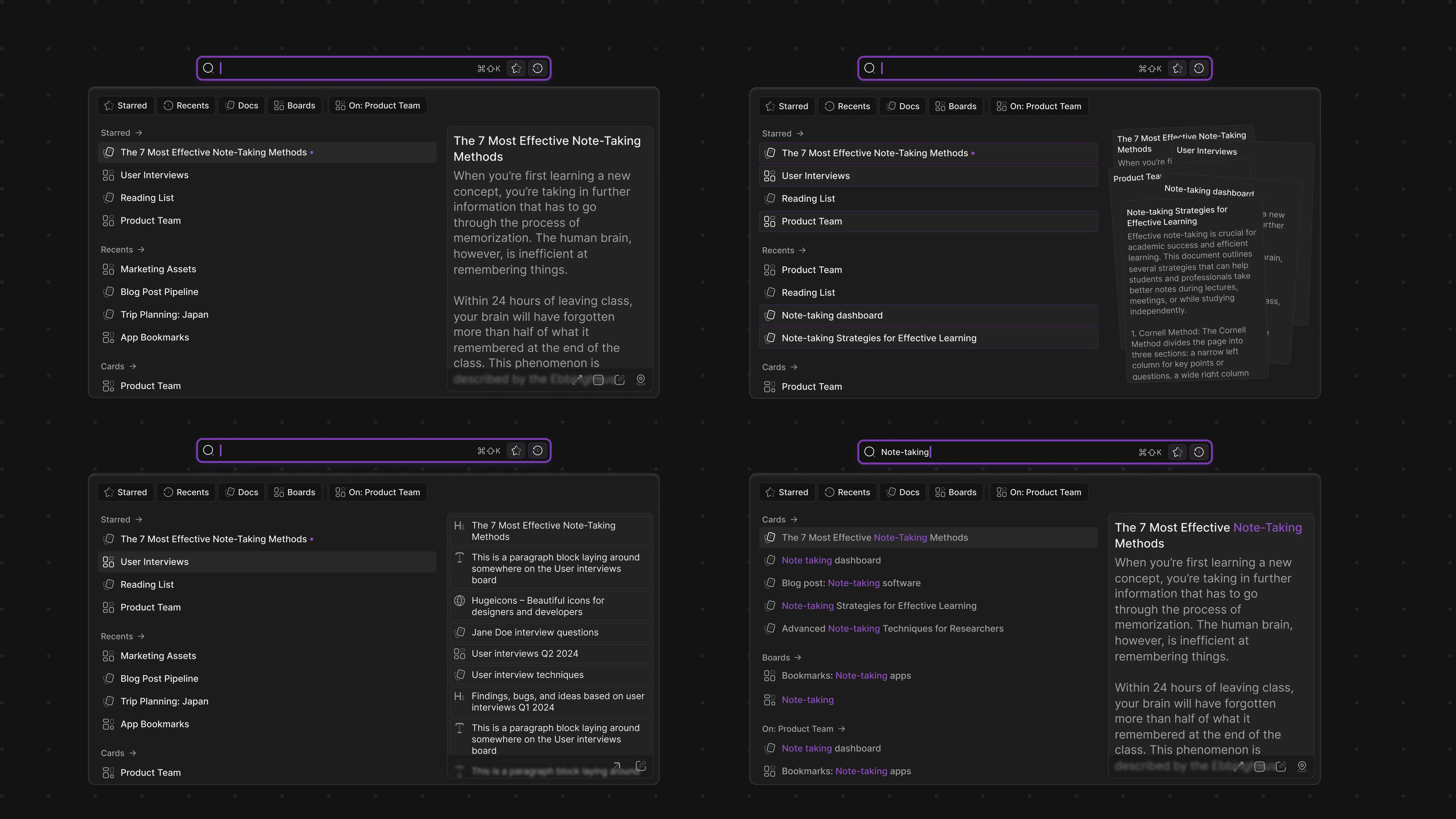
Although every single block you added to the canvas exists as its own entity, Scrintal gave you the possibility to attach blocks to each other to further structure your thinking. In case you wanted that container of blocks to become a part of your library, you could leverage the action bar and turn it into a document with a single click.
Conclusion
Throughout the two years of building and designing Scrintal from the ground up, I had to wear many different hats. I guess this is what makes working at a startup special, you bring in your own expertise, but you quickly learn to expand, leave your comfort zone, and acquire new skills. There are a lot of opportunities to grow, and I am thankful to have received the trust of leading the whole design processes, taking part in the product development and discovery, leading user interviews, constantly identifying flaws in our product and how to improve them, as well as mentoring interns.
While product design is my craft and passion, I learned at Scrintal that this is not the only way I can contribute to an early-stage environment. I deeply engaged in product discussions to figure out the next steps for our product, get a deeper understanding of user needs, heavily collaborated with engineers, and took my strategic and conceptual thinking to the next level. Throughout all those practices, I closely collaborated with the CEO, CTO, as well as our Product Manager and Engineers.